
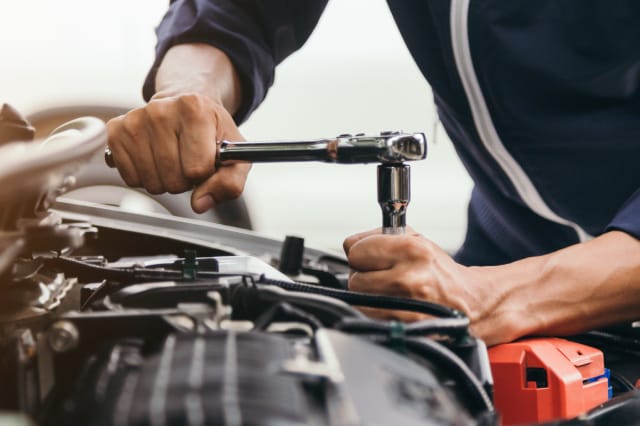
Servicing an exotic vehicle is usually more involved than standard car maintenance, in almost every way. Parts are harder to source, tolerances are tighter, and the diagnostic tools required are often model-specific. Hands-on experience with these platforms is needed by technicians, not just general training… Right Tech Auto Repair and Service works with exactly these vehicles.
Fast Facts
- Exotic vehicles often require OEM-specific diagnostic software that generic scan tools can’t access
- Some supercar oil changes require 10–12 liters of a specific grade, compared to 4–5 liters on a typical sedan
- Lead times for specialty parts in Ontario can run 2–6 weeks depending on the manufacturer and model year
- Many exotic vehicles have mid-engine or rear-engine layouts that change how basic service procedures are performed
- Improper torque specs on exotic components can cause failures that cost significantly more to repair than the original service
The Gap Between “Can Service It” and “Should Service It”
There’s a real difference between a shop that will accept your exotic car and one that’s genuinely equipped to work on it. That distinction matters more than most owners realize, at least until something goes wrong. Exotic vehicles are built to tighter specifications, with components that interact in ways a general technician may not anticipate. The margin for error is smaller; the cost of getting it wrong is considerably higher than on a standard vehicle. From what we’ve seen, this tends to be discovered the hard way, after a service that seemed fine on the surface created a problem further down the line.
Parts Availability and Lead Times
Sourcing parts for an exotic vehicle is a different process entirely. For a Honda Civic, a replacement part can usually be had same-day or next-day. For a Maserati or an Aston Martin, the part may need to be ordered from overseas, and lead times of several weeks are commonly seen across Ontario. Scheduling, planning, and how quickly a vehicle gets returned to the road are all affected by this. It’s not a flaw in the system, just the reality of low-volume manufacturing. Over time, owners who understand this tend to plan their service intervals further in advance, which helps considerably.
Specialized Tools and Software
Proprietary diagnostic software is developed by most exotic manufacturers specifically for their vehicles. Generic scan tools can pull basic fault codes, but the deeper systems, where real diagnostic information is stored, often can’t be reached by them. A technician working on a Ferrari without the right software is essentially operating with partial information. That’s a problem. Beyond software, certain procedures call for platform-specific tools: torque adapters, calibration rigs, and lift configurations that account for unusual weight distribution or low ground clearance. These aren’t items that are typically stocked by a general shop.
Engine and Layout Differences
A mid-engine or rear-engine layout changes how almost every service procedure has to be approached. Access to the engine bay is more restricted. Fluid reservoirs may be found in unexpected locations. Cooling systems are often more complex, with multiple circuits running to different components. On a front-engine sedan, a service can be worked through almost on instinct by an experienced technician. On a mid-engine sports car, that same technician needs to slow down and follow the procedure carefully; it takes more time, and it should. Rushing through an exotic service is where mistakes get made, bit by bit.
Fluid Specifications and Fill Volumes
Exotic vehicles tend to be particular about the fluids they accept. Not just the grade, but the specific formulation, sometimes down to the brand. Using the wrong transmission fluid in a dual-clutch gearbox, for example, can cause shift quality issues or accelerated wear over time. Fill volumes are different too. Some high-performance engines require significantly more oil than a standard motor, and the drain and fill process may involve multiple sumps. These aren’t details that show up clearly on a generic service sheet; they’re the kind of thing that gets learned from working on the platform directly. In a way, that’s the whole point.
Calibration After Service
Recalibration is required by some service procedures on exotic vehicles once the work is completed. Steering angle sensors, adaptive suspension systems, and advanced driver assistance features may all need to be reset or re-initialized. If that step is skipped, the vehicle may behave differently than expected, or warning lights may appear. That sounds straightforward on paper, but it’s an area where general shops sometimes fall short, not because they’re careless, but because the calibration step isn’t always obvious unless the platform is already known. That’s usually where it clicks for owners, when they realize the service didn’t end at the last bolt.
What Ontario Exotic Car Owners Should Look For
Across Ontario, the options for exotic vehicle service have grown, though quality varies considerably. The right shop should be able to tell you specifically which vehicles have been worked on, what tools are used for diagnostics, and how parts are sourced. Vague answers are a signal worth paying attention to. Experience with your specific make and model matters more than general credentials. A shop that services Porsches regularly may not have the same depth with a Bentley or a Rolls-Royce. Ask the question directly. A good technician will give you a straight answer. Probably every time.
Working With Right Tech Auto Repair and Service
Right Tech Auto Repair and Service works with luxury and exotic vehicles across Ontario, with the tools, parts access, and hands-on experience these vehicles actually require. The approach here is straightforward: every vehicle is treated the way its owner does, with care and with knowledge. No unnecessary upsells, no vague timelines, no dealership runaround. If you own an exotic vehicle and want service done properly, take a look at what Right Tech offers. Visit Website at righttech.ca to learn more or book a consultation.
Mini-FAQ
Q: Can a regular mechanic service an exotic car?
Technically, yes. But in practice, most general shops lack the model-specific tools, software access, and hands-on experience that exotic vehicles require. A procedure that takes 30 minutes on a standard car might take three hours on a Lamborghini, if the technician hasn’t done it before. Not the same thing at all.
Q: Why do exotic cars cost more to service than regular vehicles?
The cost comes down to a few things: parts pricing, labor time, and the specialized equipment needed. Exotic components are manufactured in smaller volumes, so they carry a premium. Labor takes longer because access points are often more restricted and procedures are more exacting.
Q: Do exotic cars need to go to a dealership for service?
Not necessarily. Independent shops with the right training, tools, and parts access can perform the same level of service, often without the wait times or overhead that come with a dealership. What matters is whether the shop actually has experience with your specific platform. Worth asking directly before you book.
Q: What diagnostic tools are used for exotic vehicles?
Manufacturer-specific software is often required. Generic OBD-II scanners can read basic fault codes, but deeper diagnostics on a Porsche, Ferrari, or Bentley typically need proprietary tools. Those tools are expensive to acquire and require training to use correctly. Most general shops simply don’t carry them.