
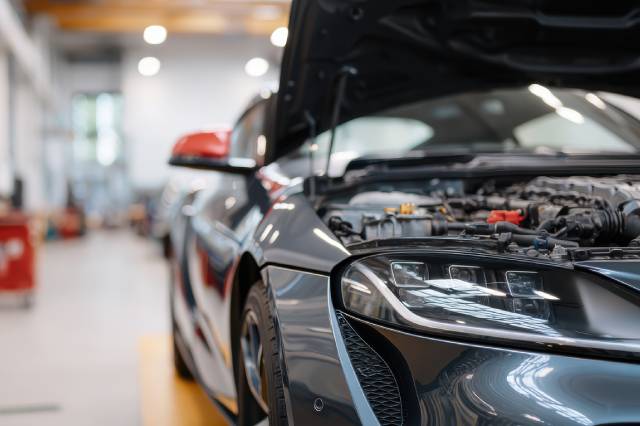
No, in most cases, your factory warranty is not voided by servicing your luxury car at a qualified independent specialist in Ontario. This right is protected by federal law; the catch is documentation… OEM-spec parts need to be used, and everything should be logged, more or less, the same way a dealership would do it.
Fast Facts
- Warranties are generally prevented from being voided solely because service happened outside a dealer network, under Canada’s Competition Act
- Roughly 60 to 70 percent of luxury vehicle owners in Ontario say they’ve been told, incorrectly, that outside service voids coverage
- OEM-spec or better parts are required for warranty protection to hold; using generic aftermarket parts is a different story
- Digital service records are kept by Right Tech Auto Repair, specifically so GTA owners have proof if a dealer ever pushes back
- Some extended warranty or “certified pre-owned” contracts have additional clauses; those are worth reading closely before standard protections are assumed to apply
Where this myth actually comes from
For years, it’s been implied by dealerships that stepping outside their service bay puts warranty coverage at risk. In many cases, this pressure isn’t malicious so much as it’s about keeping revenue in-house. Service department margins are real; losing that business to an independent specialist in the GTA stings a little, I suppose. But the legal reality in Ontario, and across Canada, doesn’t support the claim. This has been shaped largely by federal competition law, rather than anything a dealer can unilaterally enforce.
What the law actually says
Canada’s Competition Act addresses this directly. A warranty is generally not permitted to be voided by manufacturers simply because a repair or maintenance job happened at an independent shop. What’s required is that parts used meet OEM specifications, and that the work follows the manufacturer’s maintenance schedule. This protection exists because lawmakers recognized, probably rightly, that consumer choice is limited unfairly when dealership-only service is forced. It’s a fairly quiet piece of legislation. Even so, it matters a great deal here.
Where things can actually go wrong
That protection isn’t unconditional, and this is where owners sometimes get caught out. If parts that don’t meet OEM specs are used by a shop, or steps in the maintenance schedule get skipped, an opening for a warranty dispute can genuinely be created. This is less about where the work happened and more about how it was done, really. OEM parts standards have always been matched or exceeded by Right Tech’s approach, specifically to avoid this gap; it’s not optional, from what we’ve seen.
A quick example from the shop floor
A GTA client brought a Porsche 911 in last year, worried that an oil change at Right Tech might jeopardize his remaining factory coverage. He’d been told otherwise at the dealership, more than once. After the documented parts specs and the digital service log were shown to him, he seemed genuinely relieved. Genuinely. It’s a conversation that happens often enough that it’s become part of the intake process, oddly enough.
Why documentation matters more than location
If a warranty claim is ever disputed, proof of proper maintenance will be asked for by the manufacturer, not proof of which building the work was done in. This is why detailed records matter so much; matter, really, more than most people assume. Every service is logged digitally by Right Tech, partly because paper trails get lost, and partly because the client is protected if a dealer pushes back later. Anyway, that’s usually where it clicks for people. The paperwork is the actual safeguard here, not the shop’s name on the invoice.
What extended warranties change
Some vehicles come with extended coverage or certified pre-owned contracts, and these include additional clauses beyond the standard factory warranty. These agreements are written by the manufacturer or a third party, and they don’t always mirror the protections found in the Competition Act. The fine print is worth reading closely here, seriously, before the same rules are assumed to apply. Depending how you look at it, this is the one area where dealership-only language might actually hold some weight.
Getting dealership-level care without the dealership markup
Right Tech Auto Repair and Service was built around this exact problem: giving Ontario’s luxury and exotic car owners the technical expertise a dealership offers, minus the price tag and the attitude. Every job follows OEM specs, every service gets logged, and every client walks away with the documentation needed if a warranty question ever comes up. If you’re weighing where to service a car you genuinely care about, it’s worth seeing what that looks like in practice, over time. Probably enough said. Visit Website to learn more.
Mini-FAQ
Q: Will using an independent mechanic actually void my warranty in Ontario? Generally speaking, no. The law was written to stop manufacturers from forcing dealership-only service as a condition of warranty coverage. That said, the burden of proof usually falls on the owner, not the manufacturer. Records get requested more often than people expect, honestly.
Q: What if the dealership tells me otherwise? Fair point, this happens more than it should. Service revenue is sometimes the motivation behind dealership warnings, and what’s said isn’t always accurate. This kind of pressure has been noted by consumer advocates in Canada as common, even when it isn’t technically enforceable.
Q: Does the type of car change anything here? Not really, no. Exotic and luxury brands are treated the same, more or less, under the Competition Act as any other vehicle sold in Canada. Higher-end cars might have more complex service intervals, though the legal protection doesn’t shift based on badge or price tag.
Q: What paperwork should I actually keep? Look, this is the part people skip, and regret later. Invoices, parts receipts, and a written service log should be kept for every visit; digital records are preferred by most manufacturers now. Photos of the parts used aren’t a bad idea either, oddly enough, especially for anything OEM-spec.