
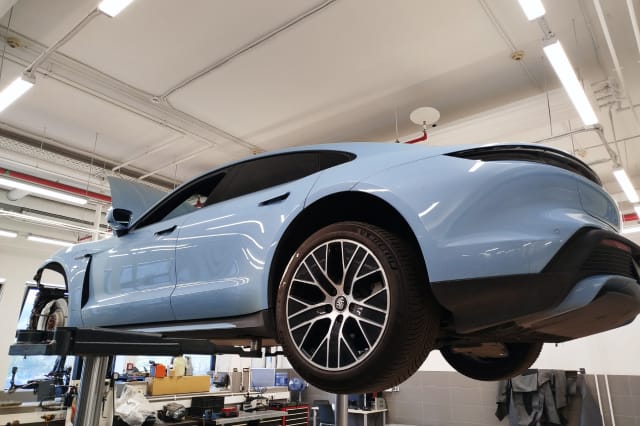
Unusual noises in a luxury vehicle usually signal a mechanical issue in its early stages; catching them early often means the difference between a minor repair and a major one. Common culprits include worn brake components, low fluid levels, suspension wear, and drivetrain stress. Getting a professional inspection done promptly is the right move.
Fast Facts
- Brake wear indicators are designed to produce a high-pitched squeal when pads reach roughly 2–3mm of remaining material, giving drivers an audible warning before metal-on-metal contact occurs
- A knocking sound from the engine bay can point to low oil pressure, worn rod bearings, or carbon buildup, all of which worsen quickly if left unaddressed
- Luxury and exotic vehicles often use more complex suspension geometries than standard cars, meaning unusual clunks or rattles can involve components that are harder and more expensive to access
- Wheel bearing noise, typically a low hum that changes with vehicle speed, is frequently misidentified as tire noise and left unaddressed longer than it should be
- Many Ontario drivers notice new noises first during cold starts in winter, when fluids are thicker and components are placed under more stress
Why Luxury Vehicles Communicate Through Sound
There’s a reason experienced technicians listen before they look. Sound travels through a vehicle’s structure in ways that reveal quite a bit about what’s happening mechanically. A well-built luxury car, whether it’s a Porsche Cayenne, a Range Rover, or an Audi S-line, is designed to suppress road noise and vibration, so when something new appears in the acoustic environment of the cabin, it tends to stand out.
The noise isn’t the problem itself. It’s the signal. And in most cases, catching that signal early is what separates a manageable repair from a significant one.
Brake Noises: The Most Common Early Warning
Braking systems are built to communicate. Most luxury vehicles use wear indicators that produce a high-pitched squeal when pads are getting low, and that sound is intentional. It’s not a malfunction; it’s a feature.
Not all brake noises are that straightforward, though. A grinding sound under braking usually means the pad material is gone and metal is being pressed against the rotor. A pulsing or vibrating sensation combined with noise often points to warped rotors. A clunk when coming to a stop can suggest worn caliper hardware or loose mounting components.
In each case, the noise appeared before the failure. That’s the point.
Engine Knock and What It’s Actually Telling You
A knock from the engine bay is one of the more unsettling sounds a driver can hear, and for good reason. It often indicates that something inside the engine isn’t receiving adequate lubrication, or that combustion timing has drifted off.
Carbon buildup is a known issue in many direct-injection engines, including those found in popular German and British luxury vehicles. Over time, deposits form on intake valves and can contribute to pre-ignition, which produces a knocking or pinging sound under load. That sounds manageable on paper, but left alone, it tends to compound.
Low oil pressure is another common cause. A knock that appears at startup and fades quickly follows a different pattern than one that worsens under acceleration. Both matter. Neither should be ignored.
Suspension Sounds and What They Mean for Ride Quality
Luxury vehicles often use adaptive or air suspension systems that are considerably more complex than standard setups. When wear starts to develop in those systems, the sounds can be subtle at first; a light clunk over bumps, a faint creak when turning, a low-frequency knock that seems to come from one corner of the vehicle.
These are often early signs of worn bushings, failing strut mounts, or degraded ball joints. Left alone, they tend to get louder and more frequent. And because the components involved in luxury suspension systems are often more labour-intensive to access, the issue being caught early usually means a simpler, less expensive repair.
Anyway, that’s usually where it clicks for most owners.
Drivetrain and Transmission Noises Worth Knowing
A whine that increases with vehicle speed, a clunk when shifting from park to drive, a vibration that appears at highway speeds but not in the city, these are all drivetrain signals that get misread or dismissed more often than they should be.
Transmission fluid degrades over time. Differential wear produces specific sounds, often a howling or humming that changes with load. CV joints, when they start to go, typically produce a clicking sound during low-speed turns.
Many of these issues are caught during routine inspections, but in between service intervals, the driver is often the first to notice something has changed. That observation, I suppose, carries real diagnostic value.
Wheel Bearing Noise: Frequently Missed, Rarely Harmless
Wheel bearing noise is probably the most commonly misidentified sound in the shop. It presents as a low hum or drone that changes in pitch or volume when the vehicle changes lanes or shifts weight, and many drivers assume it’s tire noise and move on.
The difference is usually detectable. Tire noise tends to be consistent; wheel bearing noise typically varies with steering input or load transfer. A bearing that’s been running rough for a while will often show signs of heat damage and uneven wear when it’s finally inspected.
In Ontario, where road conditions vary significantly across seasons, wheel bearings are placed under more stress than in milder climates. Worth keeping in mind, to be fair.
How to Describe a Noise to Your Technician
The more specific the description, the faster the diagnosis tends to go. Not everyone is comfortable with mechanical terminology, and that’s fine. What matters is context.
When does the noise happen? Only at startup? Under braking? At highway speed? Does it change when the steering wheel is turned? Is it coming from the front or rear of the vehicle? Does it appear when the engine is cold and disappear after warming up?
These details narrow the field considerably. A technician who’s been told the noise only appears during left-hand turns at low speed is already working with useful information. Vague descriptions slow things down; specific ones don’t.
When to Stop Waiting and Get It Checked
Some noises allow a short window before action is required. Others don’t. The challenge is knowing which is which, and that’s genuinely difficult without experience.
Generally speaking, if a noise is new, persistent, and getting worse, it should be looked at. If it’s accompanied by a warning light, a change in handling, or a smell, it should be looked at sooner. Luxury and exotic vehicles aren’t forgiving when problems are left to develop, the engineering is precise, and the tolerances are tight.
Right Tech Auto Repair and Service works with luxury and exotic vehicles across Ontario, offering the kind of diagnostic depth that owners of these vehicles actually need. If something sounds off, it’s worth getting a second opinion from people who know these platforms well. Visit the Right Tech website to learn more or book an inspection.
Mini-FAQ
Q: Does a louder car always mean a more serious problem?
Not necessarily. Volume alone isn’t a reliable indicator of severity. A faint but persistent knock from the lower engine can be far more serious than a loud rattle from a loose heat shield. What matters more is where the sound is coming from, when it happens, and whether it’s getting worse over time. Consistent attention to those details is what helps technicians narrow things down quickly.
Q: Can I keep driving if I hear an unusual noise but the car still feels normal?
Look, it depends on the noise. Some sounds, like a light squeak from a brake pad wear indicator, are designed to give you a window of safe driving time before action is required. Others, like a grinding sound from the drivetrain or a rhythmic knock under load, suggest something that probably shouldn’t be pushed. The car feeling normal doesn’t always mean everything is fine.
Q: Why do luxury vehicles seem more sensitive to noise complaints than regular cars?
It’s partly because they’re so well insulated. The cabin noise reduction in a vehicle like a BMW, Porsche, or Mercedes-Benz is so effective that even a minor mechanical sound gets noticed clearly. In a louder, less refined car, the same noise might go unnoticed for months. That sensitivity is actually useful. It means problems are often caught earlier, assuming the driver takes them seriously.
Q: Should I try to describe the noise to a technician, or just bring the car in?
Both, ideally. A description helps, especially details like when the noise happens, at what speed, under braking or acceleration, and whether it’s coming from a specific corner of the vehicle. That context narrows the diagnostic process considerably. But a good technician will also want to hear it directly. Some noises are intermittent and won’t show up on a scan tool.