
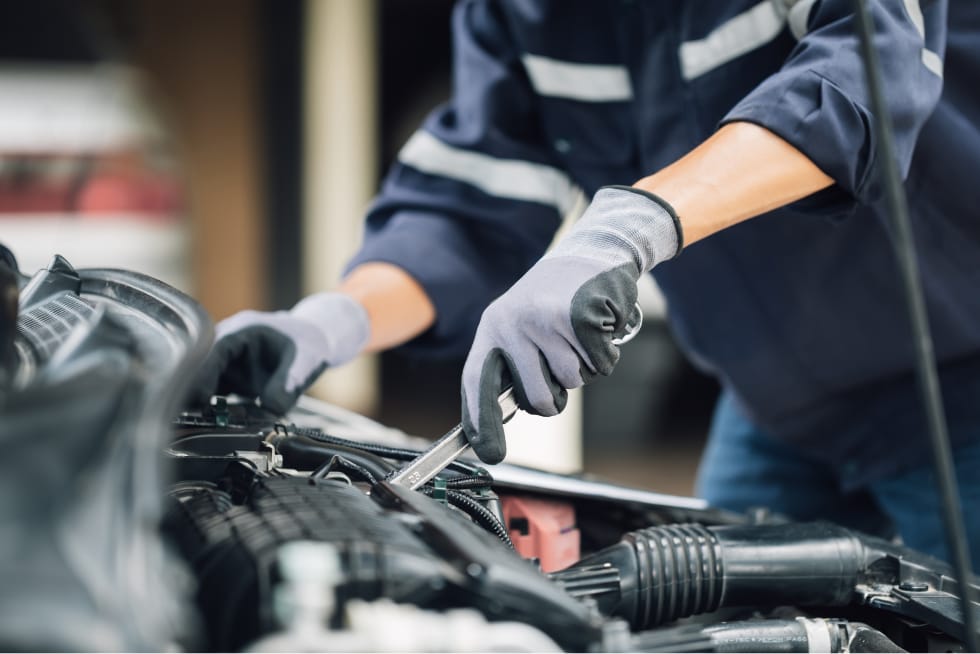
Seasonal maintenance for luxury and exotic cars in Ontario usually means four distinct service intervals tied to spring, summer, fall, and winter conditions; each season brings specific risks to tires, fluids, brakes, and electronics. Skipping even one interval can accelerate wear on components that are expensive to replace. Right Tech Auto Repair can help you stay ahead of it.
Fast Facts
- Ontario temperatures can swing from roughly -30°C in winter to +35°C in summer, a range that stresses nearly every fluid and seal in a high-performance vehicle
- Brake fluid absorbs moisture over time and should be tested at least once a year, more often on track-driven or high-performance cars
- Winter road salt in Ontario is corrosive to undercarriage components, including aluminum subframes found on many European luxury models
- Exotic car tires often have a treadwear rating under 200, meaning they wear faster and need more frequent seasonal inspection than standard tires
- Many manufacturer-recommended service intervals were written for moderate climates, not Ontario winters
Why Ontario’s Climate Demands More From High-Performance Vehicles
Ontario doesn’t offer a gentle climate for cars. The province runs through genuine extremes, from deep freezes that crack rubber seals to humid summers that accelerate brake fluid moisture absorption. For a standard commuter car, that’s manageable enough. For a vehicle with tighter engineering tolerances, more exotic materials, and performance-tuned components, the margin for error is considerably smaller.
Luxury and exotic cars are built to perform precisely, and that precision works against them when conditions shift fast. Aluminum suspension arms are corroded differently than steel ones are. Carbon-ceramic brakes behave differently in cold. Nitrogen-filled tires lose pressure faster across temperature swings. None of this is catastrophic on its own; it adds up, season by season, if it isn’t being watched. Interesting how that works.
Spring: The Most Important Transition of the Year
Spring is probably the most critical service window for Ontario exotic car owners. All winter, road salt has been working on the undercarriage. Brake lines, subframe components, and suspension hardware have been exposed to a corrosive mix of brine and freeze-thaw cycling, and by April, that damage is sitting there waiting to be found.
A proper spring inspection should include a full undercarriage review, a brake system check, and a fluid condition assessment. Coolant, brake fluid, and power steering fluid all degrade over winter, especially if the car sat for months. Tire condition matters too. Even stored tires develop flat spots or surface cracking if they weren’t properly prepared before storage. Spring is, in many cases, where you find out what winter actually did.
Summer: Heat, Track Days, and Fluid Stress
Summer brings its own set of demands. High ambient temperatures push engine coolant systems harder, and cars that see track days or spirited driving on Ontario’s back roads are having their brakes and drivetrain worked significantly harder than a daily commuter would ever require.
Brake fluid is particularly worth watching in summer. It’s hygroscopic, meaning moisture is absorbed from the air over time, and that moisture lowers the fluid’s boiling point. On a track day, that matters. Overheated brake fluid causes fade, and fade in a high-performance car at speed is not a situation anyone wants to be in. Fluid testing is inexpensive; brake failure is not. Most summer service visits should include a brake fluid moisture check, at minimum.
Fall: Preparing for What’s Coming
Fall is about getting ahead of winter, not reacting to it. The window between late September and mid-November is when the most important prep work gets done, and tire changeovers, battery testing, and fluid top-ups should all be completed before the first hard frost arrives.
Battery performance drops significantly in cold weather. A battery that’s borderline in October will likely fail in January, usually on the coldest morning of the year. Testing it in fall costs almost nothing. Replacement on a roadside in winter costs considerably more, in every sense. For exotic cars with AGM or lithium batteries, this is especially worth noting, since those battery types have specific charging and storage requirements that are sometimes missed by standard battery testers.
Winter Storage: Doing It Right the First Time
A lot of Ontario exotic car owners store their vehicles over winter, and that’s a reasonable choice. But storage done poorly causes its own problems. Flat-spotted tires, drained batteries, dried-out seals, and fuel system issues are all commonly seen as results of improper storage, and over time, those problems compound.
A quality fuel stabilizer should be used if the car will sit more than 60 days. The battery should be kept on a maintenance charger. Tires should be stored on cradles, or the car should at least be moved periodically to prevent flat spots. A breathable car cover is recommended rather than plastic. Climate-controlled storage is worth the cost for anything with a soft top or significant exposed carbon fiber. It’s one of those things that feels optional until it isn’t, I suppose.
Tires: The Most Seasonal Component on Any Exotic
Tire management on a luxury or exotic car in Ontario is genuinely more involved than it is for a standard vehicle. Many performance tires are compound-specific, meaning they’re designed to work within a particular temperature range. Below 7°C, summer performance compounds harden and grip is lost in ways that aren’t always obvious until a corner arrives faster than expected.
Winter tires on an exotic car aren’t always straightforward either. Wheel fitment, load ratings, and speed ratings all need to be matched to the vehicle’s requirements. Running a narrower winter setup is common and often recommended, but it needs to be done with the right specs in hand. From what we’ve seen, this is an area where a lot of owners either over-think it or under-think it; the right answer is usually somewhere in the middle.
Fluids and Filters: The Unglamorous Part That Matters Most
Fluids don’t get talked about much, but they’re doing the actual work of keeping a high-performance engine alive. Engine oil, coolant, brake fluid, differential fluid, and transmission fluid all have service intervals, and those intervals were often written for average conditions, not Ontario winters.
European luxury manufacturers in particular tend to specify long oil change intervals that assume consistent operating temperatures and moderate climates. In Ontario, where a car might sit cold for months and then be driven hard in summer, those intervals are worth revisiting. Differential and transmission fluids on performance cars are also commonly overlooked; they don’t get changed as often as engine oil, but they degrade, and degraded gear oil in a limited-slip differential or dual-clutch transmission is a quiet, expensive problem. Anyway, that’s usually where it clicks for most owners.
Working With a Shop That Actually Knows Your Car
Finding a shop that understands the specific requirements of luxury and exotic vehicles makes a real difference. Not every shop stocks the correct fluids, has the diagnostic software for European or Japanese performance platforms, or knows how carbon-ceramic brake systems need to be handled without causing damage.
Right Tech Auto Repair works with luxury and exotic car owners across Ontario, providing the kind of thorough, spec-correct seasonal service that keeps these vehicles performing the way they were built to. No dealership markup, no guesswork, no treating a Porsche 911 like a Civic. If you want to make sure your car is properly prepared for whatever season is coming next, visit the Right Tech website to learn more or book a service appointment.
Mini-FAQ
Q: How often should a luxury or exotic car be serviced in Ontario compared to somewhere with a milder climate?
More often, generally speaking. Ontario’s freeze-thaw cycles, road salt, and temperature extremes put additional strain on components that manufacturers tested in controlled conditions. Fluid intervals, in particular, are often worth shortening. Not dramatically, but meaningfully. That still surprises people.
Q: Is it okay to drive an exotic car through an Ontario winter, or should it be stored?
Fair point to raise, and the answer depends on the car. Some exotics, particularly those with carbon-ceramic brakes or very low ground clearance, are genuinely better off stored from November through April. Others handle winter reasonably well with the right tires and a few precautions. What’s not recommended is running summer performance tires below 7°C, which is when rubber compound grip drops off significantly.
Q: What’s the most commonly missed maintenance item when switching from winter to spring?
Look, it’s the undercarriage inspection. Most owners remember the tire swap, but the undercarriage takes the worst of the salt and slush all winter. Brake lines, suspension bushings, and aluminum components should all be checked before spring driving season starts. Easily overlooked. Worth making it a habit.
Q: Do luxury cars need special products for seasonal maintenance, or will standard shop supplies work?
Funny enough, this comes up a lot. Many European luxury and exotic vehicles specify particular fluid grades, coolant types, and even brake fluid classifications that aren’t interchangeable with generic alternatives. Using the wrong coolant in a BMW or Porsche, for example, can cause seal degradation over time. It’s one of those areas where the spec sheet actually matters.