
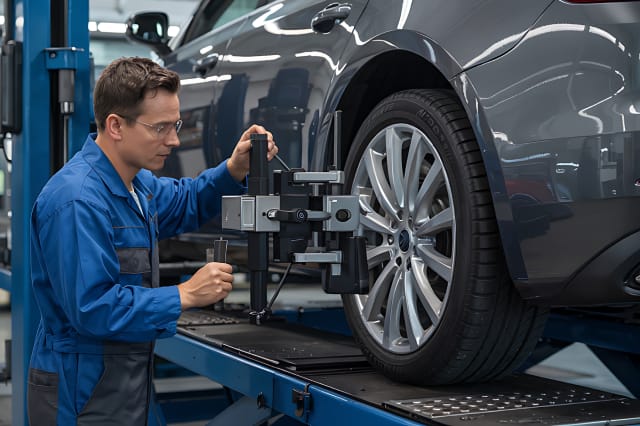
Before any repair gets approved, ask what’s actually failing, why it failed, what parts are being used, and how the total cost breaks down; roughly, that’s four questions that separate an informed decision from a rushed one. If a shop hesitates on any of them… that’s worth noticing. All four are answered at Right Tech, every time.
Fast Facts
- Luxury vehicle repair estimates often include 2 to 3 line items that owners never ask about directly
- OEM parts can cost 20 to 40% more than aftermarket, but not always for good reason
- Ontario-wide, diagnostic fees vary widely between dealership and independent shops
- A proper explanation of labor hours takes maybe two extra minutes, and it changes everything
- Most disputes over repair costs trace back to one missed question at approval time
The Estimate Isn’t the Problem, the Silence Around It Is
Price isn’t usually why luxury car owners distrust repair shops. It’s the silence around the price that does it, in a way. A $2,400 estimate feels different when what failed, why, and what it takes to fix it properly gets walked through by someone. That explanation is often skipped, not because anything’s being hidden, but because it takes time shops would rather spend elsewhere. In many cases, the fix is simple: ask, and expect an answer that makes sense.
What Actually Failed, and Why
Every repair should start with a diagnosis, not a guess. What part failed, and what caused it, should be asked plainly. Was it wear, a manufacturing issue, or something upstream that’ll cause the same failure again in six months? A suspension repair was once approved by a GTA-based owner we’ve worked with, without this question being asked; the same component failed again a year later. The root cause had never been addressed, never really. That’s avoidable, usually, if the right question gets asked upfront.
OEM, Aftermarket, or Somewhere In Between
Parts sourcing matters more for exotic and luxury vehicles than most owners realize. OEM isn’t always necessary, though it’s often assumed as the default without discussion. Which option is being used, and why, should be asked outright. Sometimes a quality aftermarket part performs just as well for a fraction of the cost; other times, OEM is non-negotiable for fit or longevity. Depending how you look at it, this single question can save or cost you hundreds.
Labor Hours: The Line Item Nobody Questions
Labor is where estimates get murky, fast. How many hours are billed, and whether that number reflects the actual job or a standard guide rate, should be asked. Access panels, specialty tools, and tight engine bays on certain exotic models can add real time, and that’s fair enough. But padding happens too, sometimes. A clear breakdown, given without hesitation, is usually the sign of a shop confident in its own math.
What Happens If You Say No
This question gets skipped constantly. What happens if the repair gets declined right now? Is it urgent, or can it wait a service cycle? Everything gets presented as immediate by some shops, just to push approval fast. Others, Right Tech included, will tell you plainly when something can be monitored instead of fixed today. That distinction respects your time and your budget both. Probably enough.
The Warranty Question Owners Forget
What’s covered if the repair fails again shortly after should be asked. A clear answer, usually spelled out before you even ask, will be given by a shop confident in its work. This matters more for higher-mileage exotics, where parts interact in ways that aren’t always obvious. How a shop actually feels about its own repair gets revealed by its warranty terms, not just what gets said about it. Interesting how that works, really.
Bringing It Together, and What to Do With It
None of this requires confrontation. Four or five direct questions, asked plainly, is all it takes; plain answers should come back just as easily. Right Tech Auto Repair and Service was built around that exact expectation: dealership-level expertise, Ontario wide, without the attitude or the markup that usually comes with it. Anyway, that’s usually where it clicks for most owners, once things finally get explained straight. If you’re ready to get answers instead of runaround, Visit Website and see what a real conversation about your vehicle sounds like.
Mini-FAQ
Q: Why does the shop need to explain what failed before I approve anything? Because a vague explanation is usually treated as a red flag. If the actual failure can’t be pointed to by the technician, something’s off. This gets explained properly at Right Tech, every single time, no exceptions made for convenience, to be fair.
Q: Should I always ask for OEM parts? Not always, honestly. Aftermarket parts are fine for some jobs and best avoided for others. Fair pricing is usually delivered when the right part gets matched to the job, not the most expensive one by default.
Q: How do I know if labor hours are fair? A breakdown should be requested. It’ll be walked through by a reasonable shop, without any defensiveness. Labor guides exist for a reason, and they’re referenced by most legitimate shops in Ontario. If the number seems padded; it probably is.
Q: What if the shop won’t answer my questions clearly? Then that’s information too. Something about how a shop operates is being revealed when it gets irritated by questions. Straight answers are not optional, they are the baseline. Walk if you’re not getting them.