
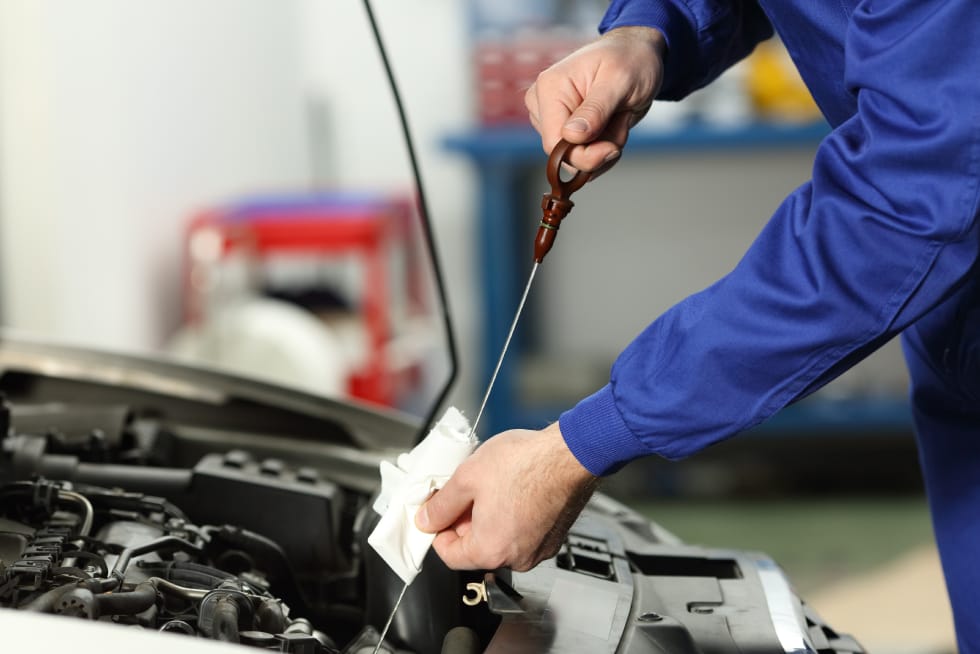
For most performance vehicles, oil should be changed every 5,000 to 8,000 kilometres; though some high-output engines, especially those running synthetic oil under hard use, may need attention closer to every 4,000 km. The right interval depends on your engine, your driving habits, and the oil specification your manufacturer actually calls for. Right Tech Auto Repair and Service can help you sort that out.
Fast Facts
- Most performance and exotic vehicles require full synthetic oil, typically rated 0W-40, 5W-50, or a manufacturer-specific grade
- High-output turbocharged engines can degrade oil up to 40% faster than naturally aspirated engines under similar conditions
- Ontario’s temperature swings, from winter cold starts to summer highway heat, accelerate oil breakdown more than many drivers account for
- Track days or spirited driving sessions often reset the oil change clock entirely, regardless of how many kilometres are on the current fill
- Waiting for a dashboard warning light is generally too late for a performance engine; oil condition matters more than the interval alone
Why Performance Engines Are Different
Standard oil change advice was never really written with performance vehicles in mind. A naturally aspirated inline-four in a compact car and a twin-turbo flat-six in a Porsche 911 are not operating in the same world, even if the same grade of oil is being burned in both. Performance engines run tighter tolerances, higher compression, and significantly more heat. More is asked of the oil, under worse conditions, for longer stretches. So it wears out faster. That’s not a flaw in the engine; it’s just the physics of what those engines are built to do.
The Role of Heat in Oil Degradation
Heat is the main enemy. Oil breaks down through a process called oxidation, and that process is sped up considerably by heat. Turbocharged engines are especially hard on oil because the turbocharger itself runs at extreme temperatures, and oil is used to both lubricate and cool the turbo bearings. After a hard drive, that oil has been through a lot, to be fair. In Ontario, where cold winter starts add thermal stress in the opposite direction, the oil is being pushed from one extreme to another more often than drivers in milder climates deal with. Over time, that adds up.
What “Normal Driving” Actually Means for These Cars
Funny enough, most of what performance car owners consider normal driving would be classified as severe service by most oil manufacturers. Short trips that don’t let the engine fully warm up, frequent hard acceleration, towing, or any kind of spirited driving all qualify. Severe service intervals are typically shorter, sometimes significantly so. If the car spends time on Ontario highways doing real speed, or gets taken to any track events, severe service territory is almost certainly where it lands. That changes the math on an oil change schedule in a meaningful way.
Synthetic Oil and What It Actually Buys You
Full synthetic oil is the standard for performance vehicles, and for good reason. Temperature extremes are handled better, viscosity is maintained more consistently, and a higher resistance to breakdown under pressure is built in. But it’s worth being clear about what synthetic oil does and doesn’t do. It extends the useful life of a fill, yes. It does not make oil changes optional or infrequent. A performance engine running hard on full synthetic still needs fresh oil more often than a standard car running the same product. The oil is better; the conditions are also harder, and those two things tend to cancel each other out more than people expect. Interesting how that works.
Reading the Signs Before the Light Comes On
Dashboard oil warning lights are designed to catch serious problems, not to serve as a maintenance reminder. By the time that light comes on in a performance vehicle, real damage may already be getting done. A better approach is to check the oil manually, both level and condition, on a regular basis. Dark, thin, or gritty oil is telling you something. A burnt smell is telling you something. These are signals worth paying attention to before the engine has to make the point more loudly. Anyway, that’s usually where it clicks for most owners.
Track Days and What They Do to Your Oil
A track day is not like driving a thousand kilometres on the highway. The engine runs at high RPMs for sustained periods, oil temperatures spike well above street driving norms, and the thermal cycling is intense. Oil that went in clean before a track day can come out looking significantly worse after just a few hours of laps. A track event is treated by many experienced performance car owners as an automatic trigger for an oil change, regardless of how recently the last one was done. It’s not overcautious; it’s just what those conditions demand.
Manufacturer Specs and Why They’re a Starting Point, Not a Finish Line
Manufacturer oil change intervals are set based on a range of assumptions about how a vehicle will be used. Those assumptions are often conservative in some ways and optimistic in others. For a performance vehicle being driven the way it was built to be driven, the manufacturer’s interval is a reference point, not a rule. The actual interval should be shaped by the oil specification, the driving conditions, and an honest assessment of how hard the car is being worked. A shop that knows performance vehicles, I suppose, can help a maintenance schedule get built that actually fits the car and the driving.
Getting It Right With the Right Shop
Performance vehicles deserve maintenance from people who understand them. Not every shop has experience with the oil specifications, service intervals, and engine characteristics that come with a high-output or exotic car. Right Tech Auto Repair and Service works with luxury and exotic vehicle owners across Ontario, offering the kind of expertise you’d expect from a dealership without the overhead or the attitude. If you’re not sure what interval is right for your car, or a second opinion on your current oil schedule sounds useful, visit the Right Tech website at righttech.ca to learn more or book a service.
Mini-FAQ
Q: Can I just follow the manufacturer’s recommended oil change interval?
Fair point, and the manufacturer’s interval is a reasonable starting place. But those figures are often calculated for average driving conditions, not the kind of use a performance vehicle actually sees. If track days are being done, stop-and-go GTA traffic is a daily reality, or the car is being pushed hard on highway on-ramps, the oil is working harder than the interval assumes. A shorter schedule is usually the smarter call.
Q: Does the type of oil really make that much difference in how often I change it?
It does, more than most people expect. Full synthetic oil holds up significantly longer under heat and pressure than conventional or semi-synthetic blends. That said, even the best synthetic has a limit, and a performance engine running at high temperatures will still break down oil faster than the same product in a standard sedan. The interval is affected by oil type, but the need to track it carefully isn’t eliminated. That still surprises people.
Q: What happens if I go too long between oil changes in a high-performance engine?
Look, the consequences are real and they tend to be expensive. Oil that’s past its useful life loses viscosity, carries more contaminants, and stops protecting metal surfaces the way it should. In a high-revving or turbocharged engine, that kind of wear happens quickly. Bearing damage, sludge buildup, and turbo failure are all connected to neglected oil changes. Not worth the risk on a vehicle you’ve invested that much in.
Q: Should I change my oil more often if I do track days?
Yes, without question. A single track day puts more stress on engine oil than several thousand kilometres of street driving. Heat cycles are more intense, the engine runs at higher RPMs for longer periods, and oil temperatures can spike well beyond what normal driving produces. An oil change before and after any track event is recommended by many performance-focused shops, Right Tech included. Better safe than sorry on a car like that.