
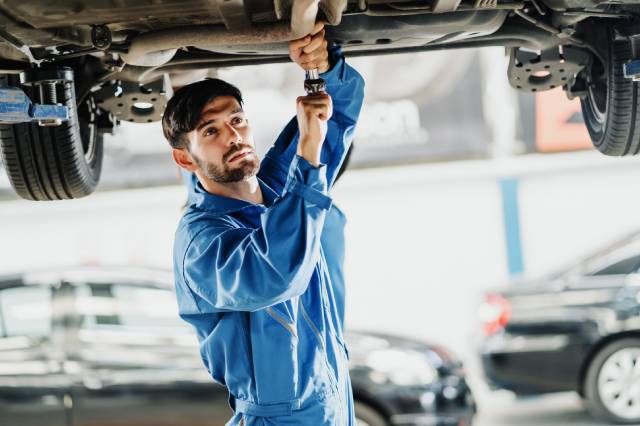
The same diagnostic tools and factory-level know-how are usually offered by independent European specialists as by dealerships, minus the inflated labor rates and upsell culture; in many cases, the difference in quality is negligible while the difference in price is not. For GTA owners weighing both, a quick comparison often settles it.
Fast Facts
- Independent specialist labor rates in Ontario often run 20-40% lower than dealership rates, sometimes more depending on the brand.
- The same diagnostic software used by dealerships is often used by independents too, just without the branded waiting room.
- Dealership service advisors are frequently trained to hit upsell targets; this isn’t a secret, just how the model works.
- Some European specialists, including shops across the GTA, focus exclusively on 2-3 brands, which tends to sharpen expertise rather than dilute it.
- Warranty work is one area where a practical edge is still held by dealerships, at least for newer vehicles.
The Same Repair, Two Very Different Bills
A client once brought in a Mercedes for a service that had been quoted north of $1,800 by a Mississauga dealership. Once the same work was reviewed, the actual parts and labor involved didn’t come close to justifying that number. This happens more often than people expect, to be fair. Dealership pricing is built around brand overhead, not necessarily the complexity of the job. Independent shops, particularly ones that specialize in European makes, tend to price based on the actual work; not the building it happens in.
What “Specialist” Actually Means
The word gets thrown around loosely these days. Brand-specific diagnostic tools, ongoing training, and parts relationships beyond generic aftermarket stock have been invested in by a real European specialist. That’s the distinction that matters, not the sign out front. In many cases, technicians at these shops previously worked at dealerships and moved on for better working conditions or more autonomy. The expertise didn’t disappear when they left; it just got applied somewhere else.
Where Dealerships Still Make Sense
This isn’t a case against dealerships entirely. New vehicles under active warranty, especially anything requiring manufacturer-specific software updates or recall work, generally need to go through dealership channels. That part’s non-negotiable. But once a vehicle rolls past its warranty window, the calculation shifts. Dealership premiums are often paid by owners for coverage they no longer need, which is a bit like renting a hotel room in a city where a house is already owned.
The Upsell Culture Problem
A structure that rewards add-on sales is often what dealership service advisors work within. It’s not necessarily dishonest; it’s just how the business model gets built. A routine visit can turn into a list of “recommended” services that may or may not be urgent. Independent shops, especially smaller ones with direct owner-technician relationships, tend to operate with less of that pressure. Whether that’s always true depends on the shop, but it’s a pattern worth noticing, in a way, across the GTA.
A Quick Story About Trust
One Ontario-based Aston Martin owner switched to an independent specialist after feeling nickel-and-dimed for years. On the first visit, he was actually talked out of a service the dealership had insisted was due. That kind of honesty tends to build loyalty fast, probably more than any marketing ever could. Anyway, that’s usually where it clicks for people who’ve been burned by inflated quotes before. Funny thing, really.
Parts Quality: A Common Misconception
There’s a belief that only OEM parts get used by dealerships while independents cut corners. That’s not accurate, at least not universally. The exact same OEM parts are often sourced by many independent European specialists, sometimes through the same suppliers dealerships use. The difference tends to be markup, not sourcing. Genuine care about a vehicle doesn’t require dealership margins to be paid on a part that costs the same regardless of where it’s installed.
Making the Right Call for Your Vehicle
Choosing between dealership service and an independent specialist isn’t really about brand loyalty. It’s about matching the work to the shop that’s actually equipped, and priced fairly, for what a vehicle needs. Right Tech Auto Repair and Service has built its approach around dealership-level expertise without the dealership attitude, serving European and exotic car owners across Ontario wide who want honest, capable work without the theatrics. If that sounds like what’s been on your mind, Visit Website to see how it works.
Mini-FAQ
Q: Is an independent shop actually qualified to work on something like a Porsche or Aston Martin? Look, qualification isn’t tied to the dealership badge on the wall. Many independent techs were trained at the dealership level and left because more control over how they worked was wanted. The tools, the software, the parts access; it’s all there, in most cases.
Q: Will using an independent void my warranty? Fair point to raise, and the short answer is no, not for routine maintenance. This is actually backed up by Canadian consumer protection law. Warranty coverage gets voided by improper repairs, not by who performs an oil change.
Q: Why do dealerships cost so much more for similar work? It comes down to overhead, mostly. Buildings, brand fees, and corporate sales targets get baked into every invoice, whether the customer notices or not. A lot of that structure gets skipped by an independent shop. The labor itself often isn’t more skilled, just more expensive to deliver.
Q: Are there situations where the dealership is still the better call? Sure, particularly with brand-new vehicles under full warranty, or recalls tied to manufacturer-specific software updates. Those get handled through dealership channels, no way around it. Outside of that narrow window, most maintenance and repair work is well within an independent specialist’s range.