
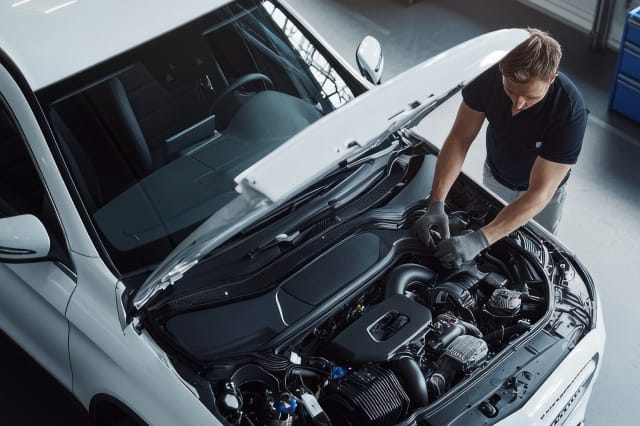
In most cases, luxury and exotic vehicles need service every 8,000 to 12,000 km, though this varies by make and driving style; European performance cars, especially, tend to run tighter intervals. Manufacturer-specific data is used by Right Tech, not generic shop defaults, to build a plan that actually fits your car. Visit the website to see what your model typically needs.
Fast Facts
- Roughly 70% of luxury vehicle owners in Ontario report being quoted dealership prices at independent shops, without dealership-level diagnostic tools to back it up
- Vehicles are serviced by Right Tech across Ontario, not just the GTA core
- Some exotic models require specialty fluids that differ significantly from what’s used in mainstream vehicles
- A proper diagnostic scan on a modern performance car can take 45 minutes to over an hour, depending on the fault codes present
- Many warranty-safe repairs can be done outside the dealership network, something a surprising number of owners don’t realize
Maintenance Isn’t One-Size-Fits-All
Maintenance is treated by a lot of shops like a checklist that applies the same way to every car. It doesn’t, though. A Porsche and a Honda might both need an oil change; the intervals, fluid specs, and even torque values differ quite a bit, sometimes more than owners expect. In many cases, schedules meant for mass-market vehicles have been followed by luxury vehicle owners in Ontario, simply because that’s what they were told. Model-specific manufacturer data is pulled by Right Tech, not a generic template. This is probably the single biggest gap between big-box service centers and shops built around performance vehicles.
What Diagnostics Actually Involve
The word diagnostics gets tossed around sometimes without much explanation. Here’s the reality: fault codes are read by a scan tool, but interpreting them takes actual experience with the platform. A misfire code on a twin-turbo V8 doesn’t mean the same thing as one on a four-cylinder economy car. Context matters, really. One client’s Aston Martin threw a code that looked electrical but turned out to be a fuel delivery issue, something only caught because the platform’s quirks were known by the technician. That kind of pattern recognition isn’t something offered by a generic scanner on its own.
Repairs: What Timelines Actually Look Like
Repair timelines are shaped more by parts logistics than labor hours, and that catches people off guard. A brake job might be finished same-day. A transmission control module for a low-volume exotic, though, could take a week or two if it isn’t stocked locally. Ontario wide, parts sourcing has gotten faster over the past few years, but specialty components still lag behind mainstream ones. Being upfront about this is part of doing the job right; nobody likes a surprise timeline extension three days in. Anyway, that’s usually where it clicks for most owners.
Service Expectations, Set Early
A lot of frustration is saved by setting expectations at the front end. Before any work starts, a written estimate is provided, along with a rough sense of turnaround. If something unexpected turns up mid-repair, like a corroded bolt that snaps during removal, it gets communicated immediately rather than buried in the final invoice. This approach is straightforward; it’s built around treating the customer like someone who understands their own vehicle. That respect is extended whether the car is a daily driver or a weekend track car, I suppose.
Why GTA Owners Choose Independent Specialists
Dealership service departments have their place, but pricing and attitude are common complaints among owners of European and exotic vehicles across the GTA. It’s not that dealership technicians lack skill; the overhead and process often get passed onto the customer instead, sometimes with less flexibility than an owner wants. Comparable results can be delivered by independent shops with the right diagnostic equipment and manufacturer training, at a lower cost and with more direct communication. According to available data, this shift toward independent specialists has grown steadily across Ontario over the past several years. Interesting how that works.
Getting Started with Right Tech
None of this matters if the shop doing the work doesn’t understand your vehicle. Right Tech was built around a simple idea: dealership-level expertise, without the dealership attitude or price tag. Whether it’s routine maintenance, a diagnostic that’s been misdiagnosed elsewhere, or a repair that needs someone who actually knows the platform, that’s the focus here. Probably enough said. To book a service or ask a question directly, visit the website and get in touch.
Mini-FAQ
Q: Will using an independent shop void my warranty? Generally speaking, no. Under Canadian consumer protection standards, warranty coverage can’t be voided just because service was done outside the dealership. What matters is that the parts and procedures meet manufacturer specification, which is exactly what’s followed here.
Q: How long does a typical diagnostic take? It depends on the vehicle, and the complexity of the fault. A straightforward sensor issue might be resolved in under an hour; something buried deeper in the electrical system takes longer, and rushing it usually causes more harm than good. Not always predictable, honestly.
Q: Do exotic cars really need different oil? Yes, in most cases. Many exotic and performance engines are built with tighter tolerances and higher operating temperatures, so the oil spec matters more than owners often assume. Using the wrong viscosity isn’t dangerous immediately, but it adds up over time, in a way. This gets overlooked more than it should.
Q: What should I expect for turnaround on major repairs? Turnaround is shaped by parts availability more than labor, especially for lower-volume exotic models where components are sometimes shipped in from outside Canada. A same-week repair is common for routine work; specialty parts can push things out further. Communication along the way is handled directly, not through a call center.