
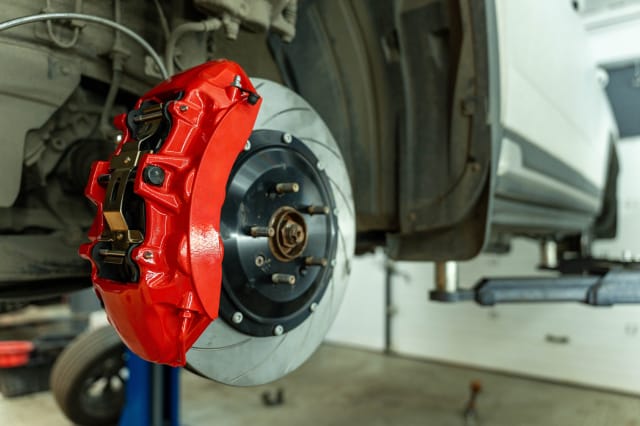
Performance brakes on luxury vehicles should usually be inspected every 10,000 to 15,000 kilometres, or at least once a year; whichever comes first. High-performance driving, Ontario winters, and aggressive stop-and-go conditions can push that interval shorter. When in doubt, have them looked at. Right Tech Auto Repair and Service can help you figure out where you actually stand.
Fast Facts
- Most performance brake pads on luxury vehicles wear significantly faster than OEM pads on standard cars, often lasting 20,000 to 40,000 km depending on driving style
- Carbon-ceramic brake systems, found on vehicles like the Porsche 911 GT3 or Ferrari 488, can last well over 100,000 km but still require regular visual inspection for cracking
- Ontario road salt and freeze-thaw cycles accelerate rotor surface corrosion, even on vehicles that aren’t driven hard
- Brake fluid should be tested for moisture content at least once a year on performance vehicles, as absorbed moisture lowers the boiling point and can cause fade under hard use
- A brake inspection takes roughly 30 to 45 minutes and can catch issues that won’t show up on a dashboard warning light until it’s too late
What “Performance Brakes” Actually Means for Inspection Intervals
Not all performance brakes are the same, and that distinction matters when figuring out how often they should be checked. A BMW M4 running upgraded iron rotors with track-compound pads is going to wear differently than a McLaren on factory carbon-ceramics. Both are performance systems. Both need regular attention. But the inspection logic isn’t identical. Pad compound, rotor material, caliper design, and how the car is actually used all factor into how quickly things change; starting with the right baseline for your specific setup is the first step.
The Problem with Following the Owner’s Manual Interval
Manufacturer service intervals are written for a broad range of drivers, across a broad range of conditions. They’re not written for the person who runs their Audi RS6 hard on the 401 every morning, or takes their Porsche out for spirited weekend drives through cottage country. In many cases, those intervals are conservative enough for average use but too generous for anything beyond it. Brake wear doesn’t always announce itself clearly, either. Pads can look fine at 60% life and then drop quickly once a certain threshold is crossed. Waiting for the wear indicator to trigger isn’t really a strategy on a performance vehicle; that sounds reasonable on paper, but it leaves too much to chance.
How Ontario Conditions Change the Calculation
Winter in Ontario is, to be fair, genuinely hard on brake components, even on vehicles that aren’t driven aggressively. Road salt works its way into caliper slides and rotor surfaces over time. Rotors that sit through cold snaps and warm spells develop surface rust faster than they would in a drier climate. That rust isn’t always cosmetic. Rotor thickness measurements can be affected by it, and uneven wear patterns tend to develop as a result. Vehicles that spend part of the year in storage and then get driven hard in spring are worth inspecting before the season really gets going. It’s a small thing that tends to get skipped.
What a Proper Brake Inspection Actually Covers
A real brake inspection on a performance vehicle goes beyond measuring pad thickness. Rotor runout, surface condition, and minimum thickness specs all need to be checked. Caliper slides should be cleaned and lubricated. Brake fluid should be tested for moisture content, because absorbed water lowers the boiling point and increases the risk of fade under hard use. Brake lines and hoses are worth a look too, especially on older vehicles or anything that’s been through several Ontario winters. The full picture takes maybe 30 to 45 minutes when it’s done properly; anything less than that probably isn’t the full picture.
Carbon-Ceramic Systems: More Durable, Not Maintenance-Free
There’s a common assumption that carbon-ceramic brakes don’t need much attention because they last so long. And it’s true that they’re built to outlast conventional iron rotors by a wide margin. But durability isn’t the same as being low-maintenance. Micro-cracks can be developed in carbon-ceramic rotors from thermal stress, particularly on vehicles that see track use or repeated high-speed stops. Those cracks are hard to spot without a close inspection. They’re also easy to miss if the technician isn’t specifically looking for them. That’s usually where it clicks for owners who’ve been skipping inspections on their exotic. Interesting how that works.
Signs Something’s Off Between Scheduled Inspections
A few things are worth paying attention to between scheduled visits. Vibration through the brake pedal, especially under moderate braking, often points to rotor runout or uneven pad deposits. Pulling to one side is usually a caliper issue. Grinding or a metallic squeal that wasn’t there before is fairly obvious. Less obvious is uneven brake dust on your wheels, which can suggest a caliper that’s dragging or not releasing cleanly. None of these are things to sit on. Performance brake systems are designed to give you confidence under hard use, and that confidence depends on everything working as it should.
How Driving Style Should Shape Your Inspection Schedule
Two people can own the same car and need very different inspection schedules. Someone who drives their Lexus LC 500 mostly on city streets and the occasional highway trip is in a different situation than someone who takes their BMW M3 to a track day twice a year. Driving style is probably the single biggest variable in how quickly brake components are worn down. Track use, in particular, puts thermal stress on rotors and pads that normal road driving simply doesn’t replicate. If any kind of performance driving is being done regularly, building in an inspection after each track event is a reasonable habit, not an overcautious one. Probably enough said on that.
Getting the Right Eyes on Your Brakes
Performance vehicles deserve technicians who actually understand what they’re looking at. That sounds obvious, but it’s worth saying. A general inspection that checks pad thickness and calls it done isn’t enough for a car with a high-performance brake package. Right Tech Auto Repair and Service works with luxury and exotic vehicles across Ontario, and brake inspections are carried out with the full system in mind, not just the parts that are easiest to see. If you’re not sure where your brakes stand, or it’s been longer than you’d like to admit since the last inspection, the best move is a straightforward one. Visit the Right Tech website at righttech.ca to book a time.
Mini-FAQ
Q: Is once a year really enough for a performance vehicle I drive regularly?
Probably not, if “regularly” means highway driving, spirited runs, or anything resembling track use. Annual inspections are a baseline. For vehicles driven hard or frequently, every 10,000 km is a more realistic target. Brake wear isn’t always linear. A lot can change in a short stretch of aggressive driving.
Q: Do carbon-ceramic brakes need the same inspection schedule as iron rotors?
Carbon-ceramic systems are built to last longer, and they’re often overlooked because of it. But micro-cracks can develop in ways that aren’t visible without a close look, and those cracks are typically missed until they become a real problem. The material is more durable, not maintenance-free.
Q: What should I actually be watching for between inspections?
Vibration through the brake pedal, pulling to one side, or any grinding or squealing that wasn’t there before are all worth noting. Dust patterns on your wheels can also tell a story. Uneven dust buildup sometimes points to a caliper that isn’t releasing properly. Not always obvious, but worth paying attention to.
Q: Does Ontario’s climate actually affect how often I should inspect my brakes?
It does, more than most people factor in. Road salt gets into caliper slides and rotor surfaces, and the repeated freeze-thaw cycle across Ontario accelerates surface corrosion on rotors even when the car isn’t being driven hard. Vehicles that sit through winter and then get used heavily in spring are particularly worth checking early in the season. A quick inspection after winter isn’t a bad habit to build.