
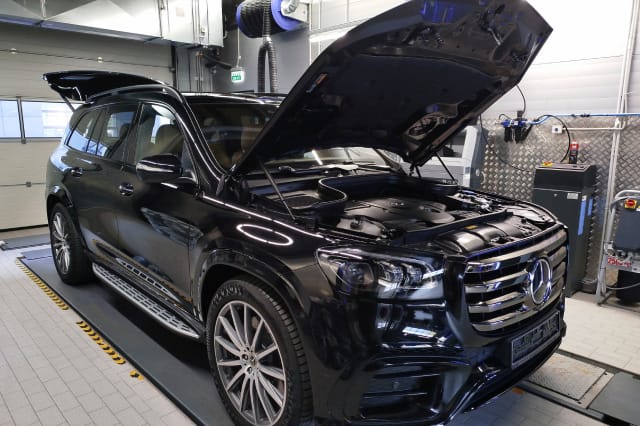
The most common signs a luxury vehicle needs immediate attention usually include warning lights that stay on, unusual noises under braking or acceleration, fluid leaks, pulling to one side while driving, and noticeable changes in ride quality. These aren’t things to be monitored over time; they’re signals to act on now. Right Tech Auto Repair and Service can help figure out what’s actually going on.
Fast Facts
- Warning lights in modern luxury vehicles can represent over 200 distinct fault codes, many of which won’t resolve on their own
- Brake fluid contamination, a common issue in European luxury models, can reduce stopping power by up to 40% before any warning light appears
- Ontario’s freeze-thaw road conditions accelerate wear on suspension components in vehicles like the Audi Q7 and Mercedes GLE
- A transmission fluid leak left unaddressed for as little as two weeks can cause irreversible damage in some dual-clutch systems
- Luxury vehicles with air suspension, including many Range Rovers and Porsche Cayennes, often show handling changes before any fault code is logged
Warning Lights Are Not Suggestions
Modern luxury vehicles carry sophisticated onboard diagnostic systems, and those systems are designed to flag problems early. The issue is that warning lights are treated as background noise by many drivers, especially when the car still drives normally. But in vehicles like a BMW 5 Series or a Mercedes E-Class, a check engine light can represent anything from a loose fuel cap to a failing high-pressure fuel pump. The distinction matters. Getting the code read promptly, rather than waiting for the next service interval, is usually the smarter call; in most cases, early diagnosis means a smaller repair bill.
Brake Behaviour Changes
Brakes on luxury vehicles are calibrated precisely, so when something shifts, even slightly, it tends to be noticed. A soft or spongy pedal feel, a grinding noise during braking, or the car pulling left or right when pressure is applied are all signs that something in the brake system needs attention. These aren’t symptoms to log and revisit. Brake fluid absorbs moisture over time, and in Ontario’s climate, that degradation happens faster than many owners realize. If stopping distances feel longer than they used to, that’s worth taking seriously.
Fluid Leaks Under the Car
Spotting a puddle under your vehicle is one of those things that’s easy to notice and easy to ignore, but the fluid type matters a lot. Oil is dark and thick. Coolant tends to be green, orange, or pink and often carries a faint sweet smell. Transmission fluid is usually reddish; power steering fluid is thin and clear-ish. Each one tells a different story. A small coolant leak in a turbocharged engine, for example, can lead to overheating under load before any temperature gauge movement is visible. From what we’ve seen, leaks that are caught early rarely turn into major repairs.
Handling and Steering Feel
There’s a reason luxury vehicles are built to feel planted and precise. When that changes, it’s usually a sign something mechanical has shifted, bit by bit. Vague steering, a steering wheel that vibrates at highway speeds, or a car that wanders slightly in a straight line are all worth paying attention to. These symptoms are often traced back to worn tie rods, deteriorating bushings, or wheel bearing issues. In vehicles with active suspension or variable-ratio steering, the feel can shift in ways that are subtle but consistent. That’s usually where it clicks, I suppose, when the driver realizes the car has been drifting slightly for weeks.
Unusual Noises During Acceleration or Deceleration
Noise is one of the clearest ways a vehicle communicates. A knocking sound on acceleration can point to engine knock, which in a high-compression luxury engine is a serious concern. A whining noise that increases with speed is sometimes a wheel bearing, sometimes a differential; a clunk when shifting from park to drive often signals worn drivetrain mounts. These sounds are sometimes dismissed as road noise or stereo interference. They’re usually not. Luxury vehicles are engineered to be quiet, so when a new sound appears and stays, it should be diagnosed. Not next month. Soon.
Electrical and Technology System Faults
Luxury vehicles are loaded with electronics, and those systems can develop faults that don’t always trigger a traditional warning light. A backup camera that freezes intermittently, adaptive cruise control that disengages unexpectedly, or a lane-keeping system that stops responding are all signs that something in the vehicle’s network needs attention. In some cases, these faults are software-related and can be addressed with a module update. In others, a failing sensor or wiring issue is what’s being pointed to. Either way, ignoring them tends to make the diagnosis more complicated over time, not less. That sounds manageable on paper, but the compounding effect is real, to be fair.
Engine Temperature and Cooling System Behaviour
An engine running hotter than normal is a warning that shouldn’t be rationalized. Significant heat is generated under load by luxury performance engines, particularly those in turbocharged or supercharged vehicles. If the temperature gauge climbs higher than usual during a normal drive, or if the cooling fan seems to run longer after shutdown, those are signs the cooling system is working harder than it should. A failing thermostat, a weakening water pump, or a small coolant leak can all contribute. Ontario summers put additional strain on these systems, especially in stop-and-go traffic. Catching a cooling issue early is one of the better investments that can be made in a high-end vehicle.
When to Stop Waiting and Get It Checked
Some of these signs are easy to put off, especially when the car still starts, still drives, and still feels mostly fine. But luxury vehicles are complex machines, and the gap between “minor issue” and “major repair” can close quickly. If any combination of the signs covered here is being noticed, the right move is to get a proper diagnosis from someone who actually knows these vehicles. Right Tech Auto Repair and Service works with luxury and exotic vehicles across Ontario, offering the kind of technical depth you’d expect from a dealership without the markup or the attitude. Visit the Right Tech website to learn more or book a service appointment.
Mini-FAQ
Q: Should I drive my luxury car if a warning light comes on but the car feels fine?
Look, this is one of the most common calls we get. The car feeling fine doesn’t mean the system is fine. In many European vehicles, warning lights are triggered well before a problem becomes physically noticeable. That gap is being used up while you’re deciding whether to book an appointment. Not a good trade.
Q: What does it mean when my luxury car pulls to one side while braking?
Fair point to ask, because pulling under braking is sometimes dismissed as a minor alignment issue. It isn’t always. A sticking caliper, uneven brake pad wear, or a compromised brake hose can all be responsible, and each of those is considered safety-critical. That still surprises people.
Q: Are unusual smells inside the cabin worth worrying about?
Funny enough, smells are one of the most underreported warning signs. A burning smell after highway driving can indicate brake or clutch issues. A sweet smell, often described as slightly chemical, is frequently associated with a coolant leak. Both are worth having looked at. Quickly.
Q: How do I know if my luxury car’s suspension is failing?
The ride will tell you, eventually. But before it gets obvious, you might notice the car sitting lower on one corner, a clunking sound over bumps, or a slight delay in how the vehicle responds to steering input. Air suspension systems, in particular, are known to develop slow leaks that worsen gradually. Worth catching early.