
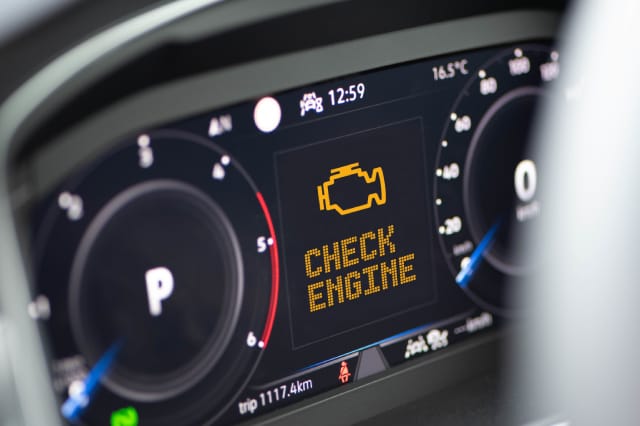
A check engine light in a luxury vehicle is usually triggered by one of several issues: an oxygen sensor fault, a misfiring engine, a failing catalytic converter, or something as simple as a loose gas cap. In many cases the car still drives fine… but that doesn’t mean the signal should be ignored. A proper diagnostic scan is the right first step.
Fast Facts
- Modern luxury vehicles can store over 200 fault codes, many of which share the same dashboard warning light
- A faulty oxygen sensor is one of the most common check engine triggers across BMW, Mercedes-Benz, Audi, and Porsche models
- Ignoring a check engine light for extended periods can turn a minor repair into a significantly more expensive one
- Ontario’s Drive Clean program was phased out, but emissions-related faults still affect performance and long-term engine health
- A blinking check engine light is treated differently than a steady one; a blinking light typically signals an active misfire that needs attention soon
What the Check Engine Light Is Actually Telling You
The check engine light, technically called the Malfunction Indicator Lamp, is part of your vehicle’s onboard diagnostic system. Dozens of systems are monitored simultaneously: fuel delivery, ignition timing, exhaust emissions, sensor inputs, and more. When something falls outside the expected parameters, a fault code is stored and the light comes on. Simple in concept. Less simple in practice, because that single light covers an enormous range of possible causes, and on a luxury vehicle, the list gets considerably longer.
Why Luxury Vehicles Are More Sensitive to Faults
Higher-end vehicles are built with tighter engineering tolerances, and that’s a big part of what makes them perform the way they do. But it also means the onboard systems are calibrated to catch smaller deviations. A sensor reading that a standard vehicle’s computer might accept without complaint can trigger a fault code on a BMW, Mercedes-Benz, or Audi; in many cases, the car is running perfectly well. The system is just doing exactly what it was designed to do: flag anything that falls outside the expected window. Over time, that sensitivity is part of what owners come to understand about these platforms.
The Most Common Causes, Ranked by Frequency
Oxygen sensors are probably the most frequent trigger across luxury brands. They wear gradually and affect fuel mixture calculations when they start to drift. After that, catalytic converter efficiency codes are commonly seen, especially on higher-mileage vehicles. Ignition misfires, mass airflow sensor faults, and evaporative emissions leaks round out the top five. A loose or degraded fuel cap is often overlooked, yet it’s responsible for a surprising number of check engine lights. Worth checking that first, honestly, before something more involved is assumed.
A Blinking Light vs. a Steady Light
This distinction matters more than most people realize. A steady check engine light means a fault has been detected and stored; it should be diagnosed, but immediate danger isn’t necessarily indicated. A blinking or flashing light is different. That typically points to an active engine misfire, which can send unburned fuel into the catalytic converter and cause damage relatively quickly. If the light is flashing, load on the engine should be reduced and a shop visit arranged the same day. Not tomorrow. That day.
What a Proper Diagnostic Actually Involves
Pulling a fault code is the starting point, not the conclusion. A code like P0420, which flags catalytic converter efficiency, doesn’t automatically mean the converter needs replacing. It could point to a failing oxygen sensor feeding the computer bad data, an exhaust leak affecting readings, or an actual converter issue; only further testing will confirm which. A good technician will use the code as a starting point and then work through the relevant components to find what’s actually going on. On luxury platforms, that process requires the right software and real familiarity with how those systems behave. Generic readers and guesswork tend to get expensive, bit by bit.
How Ontario Owners Are Affected
Ontario’s Drive Clean emissions testing program was retired in 2019, so no mandatory test needs to be passed. But that doesn’t make emissions-related faults irrelevant. A catalytic converter running below efficiency, or an evaporative system leak, affects fuel economy and long-term engine health in ways that add up. For luxury and exotic car owners across Ontario, keeping those systems in good shape is part of protecting a significant investment. That’s usually where it clicks for people who’ve been putting off the diagnosis, though it sometimes takes a repair bill to make the point.
The Risk of Waiting Too Long
Ignoring a check engine light doesn’t make the underlying fault go away. In some cases the issue stays contained; in others, a minor fault creates secondary damage over time. A small exhaust leak can skew oxygen sensor readings, which then affects fuel trims, which can eventually stress the catalytic converter. What started as a relatively inexpensive fix becomes something more involved. From what we’ve seen, the repairs that sting the most are the ones that were caught late, sometimes by a wide margin. Getting it scanned early is almost always the cheaper path, and that’s not just a sales line.
Getting It Diagnosed the Right Way
If your check engine light is on and you own a luxury or exotic vehicle, a proper diagnostic from a shop that knows your platform is the right move. A quick code pull at a parts counter won’t cut it, and neither will a guess based on what a forum post said. Right Tech Auto Repair and Service works with luxury and exotic vehicles across Ontario, with the tools and experience to go beyond the code and find what’s actually causing the fault. Visit the Right Tech website at righttech.ca to learn more or book a diagnostic.
Mini-FAQ
Q: Does a check engine light always mean something serious?
Not always. It can be triggered by something as minor as a loose or cracked fuel cap, which allows vapour to escape the evaporative emissions system. That said, it can also signal something more involved, like a failing mass airflow sensor or a catalytic converter running below efficiency. The light itself doesn’t tell you which. Only a proper scan does. Worth knowing before assuming the worst.
Q: Can I drive my luxury car with the check engine light on?
Fair point to ask. If the light is steady and the car feels normal, driving a short distance to get it diagnosed is generally considered acceptable. But if the light is flashing, or if you notice rough running, a loss of power, or unusual smells, that changes things. A flashing light is treated as an active fault. Getting it looked at the same day is the right call.
Q: Why do luxury vehicles seem to trigger check engine lights more often?
Funny enough, it’s partly because they’re engineered to such tight tolerances. A sensor reading that would fall within acceptable range on a standard vehicle might register as out-of-spec on a European luxury model. More sensors, more systems, more potential triggers. That still surprises people.
Q: Should I use an OBD-II reader from a parts store to diagnose my BMW or Audi?
Look, a basic OBD-II reader will pull generic fault codes. But luxury and European vehicles often store manufacturer-specific codes that a generic reader won’t interpret correctly. You might get a code number without any real context for what it means on your specific platform. A shop with the right diagnostic tools and experience with your brand will give you a much clearer picture.