
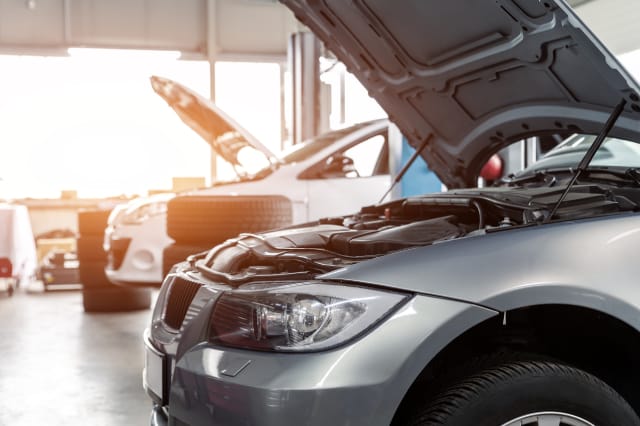
Long-term maintenance expenses can usually be reduced by staying ahead of scheduled service intervals, choosing a qualified independent specialist over a dealership, and addressing small issues before they grow; in many cases, proactive care costs significantly less than reactive repairs. Right Tech Auto Repair and Service helps Ontario owners do exactly that.
Fast Facts
- Deferred oil changes on high-performance engines can lead to repair bills that run 10 to 20 times the cost of the service itself
- Luxury vehicles in Ontario face added wear from road salt, freeze-thaw cycles, and stop-and-go city driving, all of which accelerate component fatigue
- Independent specialists typically charge 30 to 50 percent less per service hour than franchised dealerships, with comparable or better diagnostic capability
- Tire rotation and alignment checks, often skipped, are among the highest-return maintenance tasks for preserving suspension and drivetrain components
- Catching a failing coolant hose or worn brake line early can prevent engine damage that costs several thousand dollars to fix
The Real Cost of Deferred Maintenance
Skipping or delaying service on a luxury vehicle isn’t neutral. It’s a decision that usually costs more later. A missed oil change on a high-revving engine isn’t just a minor oversight; it’s the beginning of accelerated wear on components that are expensive to replace. Timing chains, turbocharger bearings, valve train components, these don’t fail overnight. They degrade gradually, and by the time a symptom appears, the damage is already done. Staying on schedule isn’t about being overly cautious. It’s the most straightforward way to protect what’s probably one of your more significant investments.
Why Ontario’s Climate Makes This More Important
Performance vehicles driven in Ontario are exposed to wear patterns that owners in milder climates simply don’t encounter at the same rate. Road salt works its way into brake components, suspension hardware, and undercarriage joints. Cold starts in January put real stress on seals, fluids, and turbos before anything has had time to warm properly. Freeze-thaw cycles crack rubber, shift alignment, and accelerate corrosion on brake lines and fuel systems. None of this is catastrophic on its own, but over several years, it adds up. Vehicles that are serviced with Ontario’s conditions in mind tend to hold up considerably better than those maintained on a generic schedule. Interesting how that works.
The Independent Specialist Advantage
There’s a common assumption that a dealership is the safest place to take a luxury or exotic car. In some cases, that’s true. But it’s not automatically true, and the price difference is real. Independent specialists who focus on European, performance, or exotic vehicles often carry the same diagnostic tools, the same OEM parts access, and in many cases, technicians who came directly from those dealerships. What they don’t carry is the overhead, the service advisor commission structure, or the upsell pressure. From what we’ve seen, owners who make the switch to a qualified independent shop tend to spend less per year while receiving more consistent attention to their specific vehicle. I suppose that’s not what most people expect going in.
Proactive Diagnostics: Catching Problems Early
One of the more practical things a luxury car owner can do is schedule a full inspection before a problem presents itself. Not a pre-purchase inspection, just a regular check-in. A good technician will look at brake fluid condition, coolant concentration, suspension wear, tire wear patterns, and any fault codes sitting in the system that haven’t triggered a warning light yet. Plenty of expensive repairs are preceded by weeks or months of early indicators that were never caught. A diagnostic check, done annually or before a season change, is one of the better investments an owner can make; straightforward, and often underused.
Fluid Maintenance: The Part Most People Underestimate
Engine oil gets attention. Everything else tends to get forgotten. Transmission fluid, differential fluid, brake fluid, power steering fluid, coolant, these all degrade over time and with heat cycling. On a luxury vehicle with tight engineering tolerances, degraded fluid doesn’t just reduce performance; wear is accelerated on components that are expensive to source and replace. Brake fluid, in particular, absorbs moisture over time, which lowers its boiling point and increases corrosion risk inside the caliper and master cylinder. Most manufacturers recommend a flush every two years. Most owners go much longer, and that gap, to be fair, is where a lot of preventable repair costs originate.
Tires, Alignment, and the Suspension Connection
Tire wear tells a story. Uneven wear across the tread face usually means an alignment issue, a worn suspension component, or both. On a performance vehicle, those problems don’t stay isolated. A worn control arm bushing affects alignment, which affects tire wear, which affects handling, which eventually pulls other suspension components into the problem. It compounds, bit by bit. Regular rotation and alignment checks, done every 10,000 to 15,000 kilometres depending on the vehicle, interrupt that chain before it gets expensive. Not glamorous maintenance, admittedly. But it’s the kind that quietly saves owners a significant amount over the life of the vehicle, and that’s usually where it clicks for people who’ve been putting it off.
Choosing Parts That Actually Fit the Vehicle
Not all replacement parts are equal, and on a luxury or exotic vehicle, the gap between OEM-quality and budget alternatives is wider than it is on a standard commuter car. Brake pads engineered for a high-performance caliper, filters designed to the correct micron rating, fluids that meet the manufacturer’s specific viscosity and additive requirements, these aren’t upsells. They’re the baseline. That sounds good on paper, but the real proof shows up when the wrong part is installed and the job has to be done again sooner, or a secondary problem is caused by the mismatch. Parts should be sourced correctly the first time; that consistency matters more than most people realize when the total cost is considered across five or ten years of ownership.
Working With a Shop That Knows Your Vehicle
Long-term cost control on a luxury vehicle comes down, in large part, to the relationship that’s built with a service provider. A technician who knows your car’s history, who’s seen how it’s been maintained, what’s been replaced, and what to watch for, is in a much better position to catch problems early and advise you accurately. That kind of continuity isn’t something a dealership service department, with its rotating staff and high volume, always provides. Right Tech Auto Repair and Service works with luxury and exotic vehicle owners across Ontario, offering the expertise and attention that these cars actually require. If you’re looking to get ahead of your maintenance costs rather than react to them, visit the Right Tech website to learn more.
Mini-FAQ
Q: Is it really worth servicing a luxury car more frequently than the manual suggests?
Look, the owner’s manual gives you a baseline, not a ceiling. High-performance engines, especially those running turbos or tight tolerances, are often better served on shorter intervals, particularly in Ontario’s climate. Salt, cold starts, and urban driving all push wear faster than the manual assumes. Worth it? Almost always.
Q: Can I use an independent shop for my European or exotic vehicle without voiding the warranty?
Fair point, and one that gets asked a lot. In Canada, independent shops are generally permitted under competition regulations to perform scheduled maintenance without affecting your manufacturer’s warranty, provided the correct parts and fluids are used. That protection has been confirmed through federal guidelines more than once. That still surprises people.
Q: What maintenance tasks do luxury car owners most commonly skip?
Brake fluid changes. Cabin and engine air filters. Differential and transmission fluid on vehicles that don’t show obvious symptoms. These are the ones that get pushed back because nothing feels wrong yet. But by the time something feels wrong, the repair is usually much larger than the service would have been.
Q: How does choosing the right shop affect long-term costs?
Significantly. A shop that knows your specific platform, whether it’s a Maserati, a Range Rover, or a high-spec German sedan, will catch things a generalist misses. Misdiagnosis is expensive. So is unnecessary parts replacement. The right technician reads the car correctly the first time, and that saves money over years of ownership, not just on one visit.